Category: Focusing

  • When Things Fall Apart: Reflecting on 2020

    So many things were ready to go from trips, to conferences, a new website featuring in-person Focusing training (remember being with people?) and then things fell apart. I just remember saving all my energy for clients and students and then wine-ing at the end of the night with my wife. I’m sure I am not alone.

    When things begin to fall apart there is that natural tendency to hold on tight and keep it together. Yet, at some point I was able to step back and see that a natural process of change had begun before COVID hit, and was accelerated by it. At first I was disoriented and wanted my “normal” life back. Over time it felt a lot better to just let go and trust that from the edge of uncertainty would emerge fresh steps of growth. How did that happen?

    I leaned into my daily and weekly practices of Focusing (and Focusing partnerships), meditation, stretching-yoga-walking, and Trauma Releasing exercises (TRE). Connecting with my wife at the end of the day who began teaching second-graders online helped too.

    What I have learned is when things fall apart it is helpful to step back and rest into the present moment and larger space of conscience awareness and view circumstances as a natural process of change. Then it becomes less something to fight and more of an uncomfortable and vague sense of something missing or not right … yet.

    My practices help me to be with that unknown and uncomfortable edge of my experience. Showing up for myself, listening to my suffering and being with the unknown and unclear has led to surprising changes.

    After 20 years of practicing psychotherapy in West Seattle, I closed my practice. I now practice full time on Vashon out of my beautiful home based studio. I invested in an outdoor seating area and let the breeze blow through my office for the occasional in-person visitor. Telehealth has transformed my practice and ability to work from home. As a body centered therapist the virtual format is not ideal. Screen time tires me and my body senses the absence of a real presence. At the same time I am so grateful for the opportunity to continue working with lovely souls – without the commute.

    — Coming in January 2021 —

    This will be my last Morrison Therapy Newsletter! In the new year you receive a newsletter from my new business the Seattle Focusing Institute. It is a dream come true developed with many little steps and missteps over the last couple of years. It will be a hub for my teaching and a growing Focusing community in the area. I look forward to developing my capacity as a teacher and mentor for those wanting to bring Focusing into their practices and lives.

    Lastly, I want to express a deep gratitude to all who I work with and who have supported me with their kind words of thanks during a really difficult year.

    May we all share in the shelter of each other and flourish through mutual kindness in the new year. ♥


  • Focusing-Oriented Therapy: Learning How the Body Speaks and Listening so It Heals

    Focusing-Oriented Therapy: Learning How the Body Speaks and Listening so It Heals

    This two-day workshop will teach you the basics of Focusing and show you how to help clients find and speak from their felt sense of a situation, which is the way the body holds experience.

    This naturally occurring process helps clients shift from distraction and disconnection to being connected and present so they feel safe and remain regulated. This allows clients to befriend their experience so that they can unwind chronically stuck and traumatic experiences safely and re-connect with their whole self.

    TBA
    Time: 9:00 to 4:30
    Place: Vashon
    Cost: $345.00

    Registration email  jeffrey@morrisontherapy.com


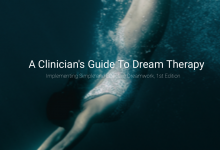
  • A Clinician’s Guide to Dream Therapy: Implementing Simple and Effective Dreamwork by Dr. Leslie Ellis

    A Clinician’s Guide to Dream Therapy: Implementing Simple and Effective Dreamwork by Dr. Leslie Ellis

    Dr. Ellis is a Focusing-Oriented Therapist and Trainer local to the Pacific Northwest. Her book presents an integrated approach to dreamwork grounded in the experiential principles of Focusing. Leslie worked with Dr. Eugene Gendlin while completing her dissertation on the subject of dreams. Dreamwork was a particular passion for Gendlin who continued to enjoy working with people on this topic into the last year of his life. One thing that makes Leslie’s approach unique from other forms of dreamwork is its emphasis on allowing the dreamer’s bodily felt sense to guide the interpretation and next steps. Her book is written in an accessible format that will be useful both to clinicians and anyone who is curious to explore more about their dreams.

    Dr. Ellis’s current projects are focused on the treatment of nightmares. “Nightmares are quite easily treatable” she says. She believes it’s critical for those in the helping and healing professions to have an adequate understanding of nightmares and their treatment because they have been found to be significantly linked with suicide. You can find her e-course on the topic here or check out her 20 minute talk here.

    To order her book, or sign up for her newsletter visit her website.

  • Focusing-Oriented Therapy: Learning How the Body Speaks and Listening so It Heals

    Focusing-Oriented Therapy: Learning How the Body Speaks and Listening so It Heals

    This two-day workshop will teach you the basics of Focusing and show you how to help clients find and speak from their felt sense of a situation, which is the way the body holds experience.

    This naturally occurring process helps clients shift from distraction and disconnection to being connected and present so they feel safe and remain regulated. This allows clients to befriend their experience so that they can unwind chronically stuck and traumatic experiences safely and re-connect with their whole self.

    Dates: TBA
    Time: 9:00 to 4:30
    Place: Vashon
    Cost: $345.00

    Registration email  jeffrey@morrisontherapy.com


  • We Move Our Past Experiences Forward in Present Moments

    We Move Our Past Experiences Forward in Present Moments

    A Tool for Disentangling Clients from Intergenerational and Vicarious Trauma

    We are now in the second month of a new decade! As we find ourselves solidifying goals and looking to the future, may we stay grounded in the knowledge that our forward growth is dependent upon unwinding past experiences in present moments. One of the great difficulties of personal change is learning to use present feelings, like the stuck sense of a situation (felt sense), and trace them back to their earlier roots. Accordingly, helping clients re-experience uncomfortable memory places safely is a key aspect of facilitating the change they so desire. As we take a look at such memory places, in ourselves and others, one thing we may find is that what we’re holding extends beyond the edges of our own autonomous experience.

    I recently taught a unit on Intergenerational and Vicarious Trauma to my second-year Focusing students. It is both fascinating work and essential knowledge for anyone assisting another on a journey of transformation. Trauma often occurs in situations involving other human beings, and families are unfortunately a common venue. Children “pick-up” disowned aspects of parents’ depression, anxiety, anger, hopelessness and much more. As clinicians, we sometimes pick up our clients’ “stuff” as well. It is essential that we know how to both help our clients find, be-with and unwind their trauma, as well as identify and set down what we pick up during our time with them.


    Let me share with you a clinical example and tool I use.

    My client is frustrated with herself for having become so overwhelmed with the “simple” errands she had run the morning of our session. She says, “I went to yoga afterwords and felt so pulled in and tight.” We explore this clear body sensation and the intense emotion of, “It’s too much. I feel overwhelmed.” She describes the way she works with people and is successful, yet something in her still feels so compromised. She explores the part of her that pushes ahead by working hard and also the part that wants to be more present and calm. After spending some time allowing her to get a felt sense (body-mind awareness) of the whole situation, it becomes clear her feelings are out of proportion to the present events. The “too much” feeling carries a sense of something already there from a prior time, and it seems there are other people’s feelings held here. This is not all hers, it is vicarious.

    I gently ask, “does this big feeling, the way this whole thing feels in your body, seem like it is just about this morning or is it perhaps an older feeling?” She says, “It is an old feeling…it has been around a long time.” She looks off to the side as if remembering something (re-experiencing one or many memories from her youth). I explain a little about how we take on others’ emotions and energy. This makes sense to her and she begins to tell me about being 7 or 8 years old.

    Her adult self is present and she is not in a regressed state, so I know we can work here without much difficultly. Out pours anger and sadness, something of her father, mother, brother and a family friend. It is a lot, and understandably becomes too much. She feels overwhelmed. She has been holding in so many big feelings for so long. There is catharsis in what she shares but what is needed is more than that. Her mind and body need to experience their disowned trauma distinctly, with others’ experience separate from what is/was hers. She needs a way to set down the vicarious aspects of the trauma and release the overwhelming burden.

    There is a rather simple exercise I use to accomplish setting down vicarious trauma. It does not take long, however complex trauma may require different rounds of setting down and differentiating between “mine” and “yours.” I ask her to get a blank piece of paper. The paper represents the whole thing, all the overwhelm, heavy body sensations, and “too much” feelings about when she was 7 or 8 years old. I ask her to sense inwardly and see if she can differentiate between what is hers and what is others’. Then I invite her to rip the paper, symbolically separating these aspects. She rips the paper easily into pieces that are mother’s, father’s, brother’s and hers. I ask her to check in with the little girl and sense how it is for her. A big smile comes to her face and she says, “She is so happy and free, she is skipping on the playground.” Clearly something big has already shifted, and still there are a couple more steps in the process.

    The first, is to take some time to do something with the pieces of paper that represent what is not hers. Sometimes people like to find a place to put the actual paper or to place the energetic quality in a known or imagined place. Sometimes people like to burn the paper. Once a workshop participant placed her paper in my compost bin! My client had the feeling that some ritual was called for but was not yet ready to complete this step. Sometimes people need to simply pause here, do some writing, or get clearer on how to set things down.

    The final step of the session was to take this new open, fresh, calm, joyful space into herself and return to the present. The past shows up to inform us and help us with the present as we move into the future. She could now see how her overwork followed by overwhelm was like driving a car by pressing the gas pedal down all the way and then slamming on the break. There was a “lightness and calm” that was deeply felt. She knows now that overwhelm is not a defect or shortcoming but rather an indication she needs to say hello to that little girl and support her letting go. Something essential about her did not get to function and be expressed as a young girl and was held frozen into adulthood. Now it is free to move forward into her life. Parts of her that have felt separate will more easily begin to integrate. She will more easily be her biggest, fully grown self.

    Is our work done? It is my experience these things take time. What I hope to have highlighted here is that we could have gotten stuck on problem solving or coping with overwhelm but nothing really would have changed. I have enough experience, I am able to see how the current situation is an enactment or expression of past events and vicarious in nature, and help her find that element and let it go. That is a huge step forward and did occur in a single session.

    Reading a client’s body and responding to them so they can enter uncomfortable somatic experience safely, and work with it, takes time to learn to do well. I offer a two-year training program in Focusing-Oriented Therapy and Complex Trauma for those who would like to learn. Please explore my training pages for dates and details!

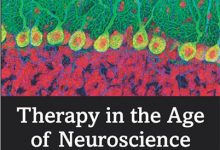
  • Book review: Therapy in the Age of Neuroscience; A Guide for Counselors and Therapists

    Book review: Therapy in the Age of Neuroscience; A Guide for Counselors and Therapists

    Book Review:

    Therapist, Focuser, and Colleague, Peter Afford, has recently published his new book:

    Therapy in the Age of Neuroscience; A Guide for Counselors and Therapists

    Peter has been teaching a series of nine one-day workshops about neuroscience and therapy for some years now. Out of this comes a powerful and deep understanding of the research into the emotional brain. While not explicitly about Focusing, this book gives further evidence and understanding to the relational presence, somatic process, and theory of personality change embeded in Focusing-Oriented Therapy.

    Stephen W. Porges, PhD, says the following: “Peter Afford boldly integrates the voices of contemporary neuroscientists into a therapist-relevant narrative that interlaces psychological constructs including diagnostic features with knowledge of the relevant role that specific neural structures play in movements, thoughts, and feelings. Through the lens of a therapist, the reader is informed how a knowledge of neuroscience can inform, support and at times transform treatment models relevant to mental health.”

  • Experience Focusing for Yourself: A Free Webinar Saturday March 28th, 2020

    Experience Focusing for Yourself: A Free Webinar Saturday March 28th, 2020

    Experience Focusing for Yourself: A Free Webinar

    DATE: Saturday March 28th

    TIME: 9-10am

    REGISTER: via email to: jeffrey@morrisontherapy.com.

    This is an opportunity to try out Focusing and get your questions answered!

    More training program information can be found here.

  • Bridging Cultures through Language

    Bridging Cultures through Language

    A Brief Reflection on the Focusing Weeklong in Chile
    by Kara Hill, MA, LMHC, FOT

    The most striking part of my experience in Chile was being part of a community in which we were deeply connected by our different languages rather than having these differences create a barrier. One day sitting at the lunch table, four of us were conversing in English. One woman looked up and realized the man sitting beside us spoke only Spanish. Without asking him whether he wanted to be included, the woman immediately began to translate our conversation and the rest of us slowed to accommodate the process. It was an offering of inclusion that assumed, “You are with us!” He was already a part of our “we” without having to ask and without our languages creating a barrier.

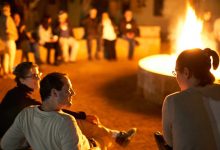
    One night I sat around a campfire with three people. I, the English Speaker with little Spanish, a native Chilean with little English, and two people from Uruguay who were bilingual. The four of us enjoyed a long, warm and connected conversation, finding things in common, learning and growing together. This happened because the friends from Uruguay took turns translating everything between us all. The most striking part, again being, there was no discussion about translating and whether or not it was needed. It seemed that the shared assumption and instinct at the conference was always to include. I know that translation is a rigorous task and was touched by the generosity of others to fill the gaps between us like this. This unifying, created a freedom to play together, laugh, and learn from one another in a holistic way, and a depth of community was felt beyond any I had before experienced.

    The different languages at the conference also made me very aware of my own lack of a second language and the privilege I have to go to other countries and rely on the people in those places to have some proficiency in my language. In Chile, I met a six-year-old girl who shyly spoke English to me having learned it in her Kindergarten class. Her older brother spoke with much proficiency. I wondered about why I had never been taught and how this gap in American education separates my country from the rest of the world. Thus, while I speak very little Spanish, I found myself offering as many words as possible. I was accepted and un-judged, unlike the way I have seen immigrants to the United States criticized and ostracized for accents or imperfect grammar. In Chile, sometimes I knew I had said things quite awkwardly, yet even a single word uttered clumsily in a foreign accent was received with appreciation. I felt so accepted in this, it fueled my natural drive to keep trying and words I didn’t even realize I knew were drawn out from somewhere within. Spanish is a language I’ve always found difficult and often wondered if I was incapable of learning. In Chile, it was available to me as I had never experienced before. Being part of this community, it seems, brought something together inside me as well.

    Kara Hill was Certified as a Focusing-Oriented Therapist by Jeffrey Morrison and is a graduate of his training program.
    photo credit:  José Ignacio Salazar for The International Focusing Institute
  • Early Bird Discount for Feb 8 & 9 Therapy Workshop Ends Jan 25!

    Early Bird Discount for Feb 8 & 9 Therapy Workshop Ends Jan 25!

     Focusing Therapy Workshop Level One: Self in Presence

    Therapy WorkshopLearn to incorporate transformational Focusing skills in your personal life and your professional practice! Specifically designed for therapists, this workshop will teach you how to bring awareness into your body and sense the subtle ways your inner self communicates with you. You’ll build trust in this inner relationship, and create a safe and nurturing environment within – one that encourages your innate gifts. You’ll discover the first important skills of finding and holding presence in a Focusing session and how you can help clients to do the same. Shifting your experiencing, and that of your clients from “I feel …” to “I’m sensing something in me that feels …” is essential to allowing a felt sense to form.

    Prerequisite: A guided session with any Focusing teacher. Contact me if you’d like to schedule a session with me or need help finding a Focusing teacher near you.
    CEUs: This workshop has been approved for 10 CEUs for Licensed Social Workers, Mental Health Counselors and Marriage and Family Therapists by the Washington State Society for Clinical Social Work.
    Includes: 
    Manual and supporting materials
    Location:
    My private Vashon Island studio. See photos.
    Fee: $295
    Early Bird Discount: $245 (if you register by Jan 25, 2014)


  • Focusing connects our inner and outer experiencing

    Focusing connects our inner and outer experiencing

    Focusing connects our inner and outer experiencing

    In the midst of our daily busyness how do we find ourselves and touch what is in need of our attention? Where do we find life’s teachings reflected back to us that help us sense our own rhythms, stuck places and flowing joy? Is there a practice that allows inner and outer experience to form one whole?

    Outer: Let’s start in the garden 

    The spring shoots of new life were followed by summer’s growth, bearing fruit, and now fall’s harvest and decay. Next will come winter’s rest and compositing. Many clients have said this is their favorite time of year, and who can argue with the run of sunshine we’ve had! For me, it is a time of turning inwards, contemplation, resting and enjoying dark mornings in silent meditation. Sometimes it seems I can even sense the food scraps composting in the garden and preparing to become new soil. Nature mirrors my inner environment.

    Inner: Developing my Inner Relationship

    I appreciate the seasons, the tides, loved ones and daily practices like walking, meditation and, of course, Focusing. Focusing is about directly connecting to my inner world and seeing what’s up. It is first a way of being with my experience like meditation, and then takes a big leap forward with the development of the Inner Relationship. It is a practice of compassion, deep empathy and amazing, fresh experiencing that leads to small steps of transformation and renewal.

    Would you like to explore Focusing? 

    In the coming year, there will be many opportunities to see if Focusing is something you would like to learn. Change your life and the way you work with clients in 2020! I will begin a new business and website dedicated to education and training. These ventures will support the teaching of Focusing, Focusing-Oriented Therapy, and other practices for change. They will feature my training program, support a growing Focusing community and develop trainers to teach Focusing in their own unique ways. I hope to see you at one of our events and share the gifts of being connected to yourself and experiencing the essence of change that is Focusing.

    It’s my Birthday! A Year in Review

    It is the end of my year and the beginning of a new one. I have been surrounded by so much outward energy with training Healing Professionals, co-teaching a program in Chile and presenting at an international conference in Mexico – all accomplished before spring! Then it was reconstructive surgery on my ankle. Wow, what a teacher pain is! How challenging it is to be patient, live with chronic pain, learn to walk again, and do all the right things for my healing, even when sometimes I just don’t feel like it. Let’s face it, change is not easy, but I have been adapting and trying new things, accepting limitations and relying on others for encouragement and support. It’s all very meaningful experience.

    Currently, I am training an AMAZING group of professionals who are on a two-year journey learning Focusing and working with Complex Trauma. They bring me joy each weekend we spend together. Further, I continue to meet deeply with myself through Focusing Partnership exchanges, trips to the beach and time with those I love. I feel warmly connected to myself, my community, and my environment. May Fall find you inwardly and outwardly connected to your emerging self, seeking the light of day and the joy of being you-with others too!