
Category: Focusing

  • Focusing-Oriented Therapy Q and A:  What are the two most common therapeutic dead ends and how do we avoid them?

    Focusing-Oriented Therapy Q and A: What are the two most common therapeutic dead ends and how do we avoid them?

    Two kinds of dead ends can happen in psychotherapy: The first occurs when the therapy consists only of interpretation and inference without an experiential process. The second dead end happens when there are [clearly felt] emotions, but they are repeated over and over. (Gendlin, p. 7, 1996)

    Therapy often becomes an attempt to understand a situation like, “why am I so anxious?” Therapists and clients engage in detective work about causes, beliefs and behaviors that lead to anxiety. This investigation can be interesting but seldom leads to change unless there is time spent touching into the bodily felt experience of being anxious.

    This first dead end could be called staying in your head or as Gendlin (1996), whose research led to the discovery of Focusing, referred to it,  “dead-end discussion” (p. 7). We are taught both to know the answer to things (we assume one already exists) and to use our intellect to figure things out. We say things like, “It must be because I am so hard on myself. You would think by now I would have grown up and made these changes.” Notice the word must. “It must be” is an inference about something without ever sensing into it. This intellectually jumped to conclusion doesn’t lead to anything new.

    The way out of this mental ping-pong match is to slow down and notice what effect anything that is said or done has on how the problem is directly experienced. In the example above the client says, “It must be because I’m so hard on myself.” What would you say in response? I might say, “You’re sensing something about the way you treat yourself that feels hard. Can you sense in here (hand on my chest) how it feels when you’re hard on yourself?” I am directing the client to sense their experience directly, bodily, in the moment. From there, little steps of change can arise because the client has the issue as a living something to be explored further. Without directly experiencing it, an issue remains static and conceptual, waiting for some outside pressure to make it better.

    The second dead end is one of unchanging feelings. Clients often have strong emotions, but rather than resolving the feelings repeat and nothing changes. Dead end feelings remain the same because they seem rather clear and final. While emotions include a somatic awareness, most clients don’t know how to stay with it and explore the unclear murky edge of their experience. Moreover, most schools of therapy do not provide training in how to help clients with this process.

    The way out of this dead end is by helping the client sense into and below the emotion that seems clear to a place of something felt, yet unclear. Focusing emerged from research, which showed that clients who made changes in therapy did so because they were already able to sense and explore the unclear edge of their experience. A client may say, “I’m so frustrated with him… (groping for words and hesitates) …well it’s more like a feeling of deep disappointment. I was hoping it would be different this time.” You can see in this example how the content of the experience begins to change as the client explores the vague edge in her relationship. This occurs because the client is in touch with the felt living process of their experience.

    Every experience and event contains implicit further movement. To find it one must sense its unclear edge. Every experience can be carried forward. Given a little help one can sense an “edge” in the experience more intricate than one’s words or concepts can convey. One must attend to such sensed edges because steps of change come at those edges. (Gendlin, p. 15 1996)

    Reference:

    Gendlin, E. (1996). Focusing-Oriented Psychotherapy: A Manual of the Experiential Method.New York: The Guilford Press.


  • FOT Q&A: During the holidays I feel like I’m drinking from a fire hose. How can I change that?

    FOT Q&A: During the holidays I feel like I’m drinking from a fire hose. How can I change that?

    Good question! It starts with a pause….

    We are bombarded with information, requests and internal dialogue that never seems to stop. We become distracted, anxious and ungrounded. We lose touch with our own natural ability to be present and sense how we feel in a given situation.

    If we can simply pause and notice how we are in any given moment that gives us information we lacked just a moment before. In the act of pausing we begin to listen to our own experience. We begin to listen to our body and its GPS system for orienting our awareness.

    All mindfulness is pausing and shifting the focus of our awareness from the left hemisphere of our brain to the right hemisphere. Both hemispheres have amazing operating systems, and each accomplishes different things. Healthy living requires both sides to be integrated and accessible. We are so busy managing information, working and doing in our left hemisphere way of being, that we risk being cut off from what the other half of our brain is richly trying to tell us.

    Focusing is a deliberate pausing and turning toward our right hemispheres’ take on the world. This is a slower embodied sensing, feeling, and noticing of implicit emerging experience. Implicit knowing is a different kind of living process and awareness. It needs time to come into focus. Focusing is the natural way we can listen to our bodily knowing and bring it into focus, thus making it explicit and actionable. We have two brains in one container, and we might as well learn to use them both!

    To help you take this to the next step, I am offering a new course that will teach you to embrace this pause, listen deeply to yourself and in so doing find an ease you might not have thought possible in the midst of your holiday pressures.


    See: Peaceful and Present through the Holidays: A NEW Focusing Course with Jeffrey Morrison

  • FOT Q&A: What do Bessel van der Kolk, mythology, and spiritual perspectives on healing have in common? 

    FOT Q&A: What do Bessel van der Kolk, mythology, and spiritual perspectives on healing have in common? 

    FOT Q&A:

    What do Bessel van der Kolk, mythology, and spiritual perspectives on healing have in common? 

    Focusing is about a kind of experiencing– one that is embodied, works with the implicit (bodily sensed emerging experience), and is relational. Neuroscience provides a map, but learning to navigate the complexities of trauma takes knowing the territory. The healing journey of working with trauma is an off-road experience. Maps help, but a feel for the territory and walking with others through their dark night of the soul requires experience and understanding outside of the reductionistic models that permeate our field.

    My vision is one of a journey taken with a small group of people dedicated to our own unique unfolding, while we explore working with trauma and post traumatic growth together. We integrate neuroscience scholars like Bessel van der Kolk, with mythology (our own and others’), indigenous perspectives of land and healing, philosophy, spirituality, and of course Focusing-Oriented Therapy. All of which offer wisdom and support in the healing journey for both practitioner and patient. As we deepen our skills and understanding, we gain confidence in how to help clients release embodied trauma and chronic stress and we learn that attending to our own wounds reveals our own unique gifts. This work touches on the spiritual as it enables each person to trust their unique way forward.

    Perhaps what is most special about my program is the people doing it! The process of going through this journey together as a small group of amazing people is not only educational but deeply meaningful and fun. As we explore our humanness, vulnerability, and growing edges, we come to see how relational healing really is. We learn to be Present and to use our Focusing skills to facilitate the body’s filling-in of what was blocked by trauma and allow our gifts to come forward.

  • FOT Q&A: What is a felt sense?

    FOT Q&A: What is a felt sense?

    In my July newsletter I discussed the research that led to the discovery of a natural human process that became known as Focusing. The key research finding pointed to something successful clients (those who found fulfilling change) were already doing. Find out more here.

    Successful clients slowed down and sensed into the felt quality of what they were trying to articulate, a process which often brought forth fresh language and expression. What were they sensing into? In Focusing we call this somatic (felt) knowing (sense): a felt sense. It is bodily felt, and it has a “knowing” that makes sense and feels right.

    Neuroscience of the cerebral hemispheres suggests that whole body knowing is first felt and sensed in the right hemisphere as a vague implicit awareness. This kind of knowing is bodily felt and slow to form. As it is sensed directly and felt into, our experiencing carries over or connects with left hemisphere processing that controls symbol formation and expression (words, metaphor, gesture, images). As we find the right words to express a complex sense of a situation the experience comes into focus.

    We have all had the experience of struggling to find the right words or way to express something. We stumble and grope for words. We may say something and immediately know it kind of fits but still doesn’t feel right. When the right words/expressions do come there is a bodily relief, a kind of shift in how that whole situation is for us.

    Check out this brief summary from my training program of what a felt sense is and how it is so different from our usual way of experiencing.

    A Felt Sense Is…

    “A felt sense is a freshly forming, wholistic sense of a situation that has a ‘more than words can say’ quality to it.” (Cornell, 2013, p. 42)

    “A felt sense is the right hemisphere’s take on our here and now inner experience, a subtle quality of feeling. It is holistic (raw perception, before the left hemisphere divides it into separate units), non-verbal and informed by the ongoing state of the body.” (Afford, 2014, p. 249)

    Clients speaking from a felt sense:
    • After a recent loss: “I feel like 100 bricks are on my chest that contains a broken heart.”
    • The feeling of being stuck in life: “It’s like being in snow up to my waist.”
    • Describing a part of her life that is not being taken care of: “It’s like there is a glass bubble over the part of me that is starving.”

    How clients may appear when they have (are speaking from) a felt sense:
    • Groping for words while becoming inarticulate saying things like, “I’m not sure how to say this.”
    • Becoming quiet, looking down or away (while attending to inner experience)
    • Gesturing toward the middle of their body
    • Using words like “kind of” or something” or “here”

    Felt senses are:
    • Emergent process (in the process of becoming), and therefore experienced in the here and now
    • A hard to describe emergence of “more than” can be cognitively expressed, which often need fresh metaphorical language
    • About a life situation but contain more (implicitly) than has been previously known.
    • Experienced in a bodily way
    • An intricate whole that sums up, captures, includes, contains, all the aspects of a situation at once: a picture is worth a thousand words!
    • An opening where strands can unfold bringing steps of change, and a gateway for something completely new to happen!

    Felt sense take time to form, a pausing, inviting, and allowing it to emerge. When we ask inside “How was that for me?” and pause in this way, we do not discover what was already there, but rather we allow something implicit to begin to come into focus explicitly which allows it to now function in a new way.

    There are many descriptions of the felt sense, here are a few of my favorites:

    “Felt senses can form when we pause …when we are not feeling overwhelmed or identified with emotional states …when we let go of familiar words or concepts for a while …when we sense at the body level of awareness …when we can stand it that what we feel is vague, unclear, hard to describe, impossible to explain.” (Cornell, 2013, p. 44)

    “Focusing is a mode of inward bodily attention that is not yet known to most people…. It differs from the usual attention we pay to feelings because it begins with the body and occurs in the zone between the conscious and the unconscious. Most people don’t know that a bodily sense of any topic can be invited to come in that zone, and that one can enter into such a sense. At first it is only a vague discomfort, but soon it becomes a distinct sense with which one can work, and in which one can sort out many strands … Focusing is a way to enter regularly and deliberately there where therapeutic movement arises.” (Gendlin, 1996, p. 1)

    “Focusing is the process whereby the concept that fits the felt sense becomes clear. Felt sense is a more complex phenomenon than emotion. It may be the inner ‘place’ (body and right hemisphere) from where emotion seems to arise. Emotion, on the other hand, can be left hemisphere biased (such as anger), and it can involve the right hemisphere overwhelming the left with high arousal (such as anxiety, upset) that disrupts cognition – neither of which are focusing experiences. The ease with which we can ignore felt senses reflects the left hemisphere’s ability to inhibit the signals coming from the right. Focusing is a practice that aims to overcome this inhibition.” (Afford, 2014, p. 249)

    References:
    Afford, P. (2014) Neuroscience and Psychological Change in Focusing. In Madison, G. (Ed.), Theory and Practice of Focusing-Oriented Psychotherapy: Beyond the Talking Cure (245 – 258). London: Jessica Kingsley Publishers.

    Cornell, A. W. (2013). Focusing in Clinical Practice: The Essence of Change. New York: W. W. Norton & Company.

    Gendlin, E. (1996). Focusing-Oriented Psychotherapy: A Manual of the Experiential Method. New York: Guilford Publications. Print and Kindle Editions.

  • FOT Q&A: What makes my training program unique?

    FOT Q&A: What makes my training program unique?

    Focusing, the process of being experientially present with one’s own unique felt quality of life, is at the heart of most somatic and mindfulness approaches being taught in the psychotherapy field today. Focusing is psychological, philosophical, and touches spiritual edges as it takes a person deep into their own experiencing. It facilitates relational presence in the therapeutic encounter as it helps clients regulate emotional states, enter into their felt sense awareness of stuck patterns, and bring about bodily felt steps of change. Students of my Focusing training series come to profoundly know and practice this naturally occurring, innately powerful, self-healing process, which allows you to be with both your clients and yourself in a completely new way. They have described my training as “deeply satisfying,” both personally and professionally.

    The healing of trauma is a sacred journey. The word sacredhere speaks to the gravity of what clients bring into the room when they entrust us with helping them. To lead another on a journey, you must know the landscape. Therefore, a core value of my Focusing training program is your development as a healing professional. As a student, you learn to be a good listener to your inner process as you develop the skills to bring Focusing into your work with others. This self-cultivation not only helps you learn and apply a strong foundation of skill; it also bolsters your own sense of presence and solid ground while guiding your clients on the journey of healing from trauma.

    The program begins by creating a safe space where participants can grow and explore securely. I use a small group, cohort model to maximize a sense of trust and community. We practice all Focusing skills during the workshops so that you learn experientially. Throughout the learning series, you’ll experience a widening sense of your own authenticity. Within partner exchanges and supervised sessions, you further develop a strong inner relationship with your biggestself and build confidence in facilitating that growth with your clients.

    As therapists, we all need a variety of ways to care for ourselves and our “stuff.” Focusing partnerships are a great way to support ourselves and each other in the work we do. Partnerships are not only a good way to learn Focusing, but become for many the best self-care and professional-care practice they have ever experienced.

    Please come and join me for what students describe as “retreat-like” weekends, in the natural setting of my workshop space on Vashon Island, the safety of community, and the emphasis we place on personal care and growth.


    See: Jeffrey Morrison Focusing Oriented Therapy Training Program


  • Giving Thanks

    Giving Thanks

    As we prepare to sit around festive tables with abundant food, beverages and seasonal decorations perhaps we can pause and reflect on where it all came from. In most cases a store, but before the store? Most of what we consume begins in the soil, raised by the sun, encouraged by the rain, and cared for by the farmer. When we look at our food, we may become aware of the interconnection to all of life that created it and brought it to our table. We paid for it, yes, but is it not more satisfying to imagine it as a gift which includes the star dust that falls to earth and enters the soil? Perhaps it includes a thunderstorm or two! Our bodies are not separate from the eco-system that supports our existence. Are not groceries turned into a human being by a mother who eats to support two?

    Now that we are aware of our connectedness to all can we bring our attention to the people at the table? Can we look around, see the eyes of others, and be thankful for their presence? Can we share the gift of listening and what Gene Gendlin refers to as interhuman attention? Are we not enacting a creation story, of giving birth and nurturing consciousness, at this very meal? “Perhaps I am a dreamer but I’m not the only one” says John Lennon. I am beginning to think the most precious gifts are the ones that give something of our self through attention to the other. I give thanks for my connection to All and to my relationships with each opening of consciousness we call a human being.

    In truth, I am a bit slow. I took for granted my mother’s gift of life to me, her home-grown vegetables and holiday decorations. I grew up with many things and the expectation there would always be more. As I grow into my elder-hood, I have come to feel blessed by my adult children’s gifts of writings, art or hand-made gifts and the loving touch from my wife, her garden harvest and flowers on the table. I get to listen to their joys and sorrows and dreams and I feel thanks for their attention and listening as the seeds I have sowed come back to me. I have so much to give thanks for!

    It may seem simple, but I do believe we all feel grateful when we experience being connected to the earth and the people that make up our lives through this abundance that is there all the time. We only have to pause and bring our attention to our food and the eyes of those around us.

    Blessings during the holiday season.

  • How I navigate these days of darkness  

    How I navigate these days of darkness  

    These are the days of darkness. A time of year when it is wet, cold and dark. These are times of darkness in our world, something felt in our bodies that creeps into our consciousness regardless of intention. While culture shakes and climate rattles we can find ourselves checking out or becoming overwhelmed. For those of us in the healing professions it is a double dose, facing our own vulnerability while being open to and available for those we care for. What’s a person to do?

    Sometimes we can escape to another environment for some fun in the sun or perhaps a freshly powdered ski slope. Last year, I escaped first to a radiant beach on the coast of Chile in January and then to a sun soaked shore in Mexico come March. I felt fortunate for these experiences. We can’t always do such things. Everyday life brings many demands. This year it’s double college tuitions, projects, saving for future adventures, repairs to house and car: oh my! In the midst of these dark days and demands, how do we maintain perspective, keep hope alive, and carry on a positive attitude for those around us? Here is my suggestion:

    It starts with a Pause.

    It is so simple and yet revolutionary. When I pause, I stop the ongoing flow of thoughts, feelings and actions that sweep through my day. I make this one very simple intentional turn toward myself and ask inside, “How am I?” Then I wait for a moment, and listen. I could just fill in the empty space with what I already know or the list of to-do’s I am currently working on, but no, I stop and listen being curious, “How am I in there? What am I needing or wanting right now?” Then I wait, as if in meditation, and allow space to form from which something new will emerge. Even if you think nothing will show up, wait, it will: that’s just how it works.

    From this pregnant space, we have options. New possibilities present themselves. I can linger there inside myself and sense more deeply into my felt sense. I can just notice thoughts going by or I can say, “Hello” to something wanting my attention and listen to it.

    To pause, is to mindfully turn toward our present moment implicit knowing, the place where the new and creative originate. It is where we find new doorways to experience that lead us out of the dark, out of old ways.

    “Is this it?” you might ask. No, but it is a doorway to something more, fresh and new. Is that not the path we seek oh fellow traveler, to shift our perspective from the gloom and dread to finding the light inside the darkness? Pausing is a practice and takes time to make a habit of. It takes practicing! Are we not ever seeking practices for change and personal renewal? Start here, with a pause, and open the door to the little moments that bring real and lasting change.

    Below you will find some resources to help you on your way.

    The Pause Movement shows how teaching people to Pause brings real change in the world.

    In The Revolutionary Pause Mary Hendricks-Gendlin shares how pausing shifts us towards peace.

    If you’d like to deepen your experience of pausing and learn how it can nourish your healing practice, consider signing up for one of my upcoming Focusing courses.

  • Introduction to Focusing

    Introduction to Focusing

    Introduction to Focusing – a powerful technique for personal transformation

    Focusing is a mindful and body-centered self awareness skill for growth and healing. It is both a simple and complex matter of holding an open, non-judging attention to the feeling your body holds about a situation. If you need an Introduction to Focusing, we’re here to guide you!

    Focusing is a natural, innate skill that was discovered, not invented. People are born with the ability to know how they feel from moment to moment. Over time though, most of us lose trust in the wisdom of our bodies and feelings. It’s important that we relearn this skill of deep listening. 

    Focusing emerged from research in psychotherapy

    In the early 1960s, Professor Eugene Gendlin, at the University of Chicago, began to research the question, “Why is psychotherapy helpful for some people, and not for others?” He and his colleagues studied thousands of recorded therapy sessions.

    When listening to the tapes…click here to read more.


  • Looking for a Seattle therapist? I Am Currently Accepting New Clients.

    Looking for a Seattle therapist? I Am Currently Accepting New Clients.

    The Seattle therapist you can believe in

    Some of the issues I treat include:

    • Anxiety
    • Depression
    • Grief and Loss
    • Trauma, Relationship Issues
    • Couples
    • Individuals
    • Families
    • Conflict
    • Stress
    • Self Esteem
    • Body Image

    Please feel free to contact me with your questions or to schedule a free half-hour session to see if my services could be a good fit for you. You can learn about my therapeutic Approach here.


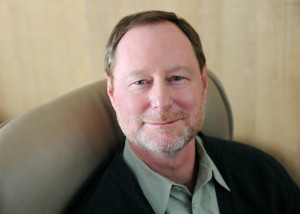
    Jeffrey Morrison, Seattle therapistJeffrey Morrison, M.A., LMHC

    206-935-7850
    jeffrey@morrisontherapy.com

    Office Locations

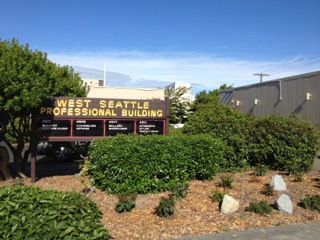
    Morrison WS Office 3West Seattle Professional Building: 

    4505 44th Avenue SW, Seattle, WA 98116

    See map


    Directions to my West Seattle therapist office:

    From I-5 and Highway 99:
    Take the West Seattle Bridge (exit 163 from I-5)
    Cross 35th Avenue and turn right at Oregon Street (3rd light)
    Cross California Avenue and turn left at 44th Street (1st left)
    The West Seattle Professional Building is on the southwest corner of 44th Avenue SW and SW Oregon Street.
    Parking is located next to the building or across the street.

    Vashon Island Office

    Please call for directions: 206-935-7850

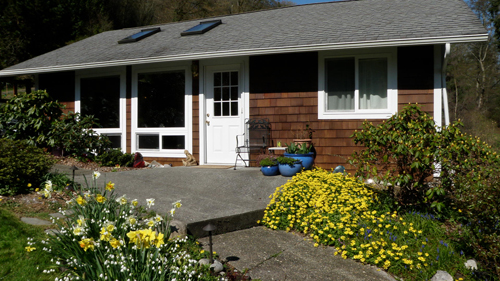
    Morrison Therapy Vashon Office-1Seattle therapist, focusing-oriented therapy


  • Personal Reflections of this Year and Looking Ahead

    Personal Reflections of this Year and Looking Ahead

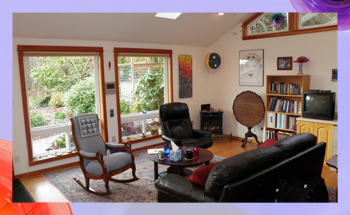
    I had reconstructive surgery on my right ankle at the beginning of April. My mindset was one of ending and beginning. I think Spring is the perfect time for such a journey. In my recovery, I spent two weeks resting on my couch at home watching spring unfold outside my windows. Sometimes we need an event in our lives to facilitate change. Surgery, for me, was an event marked with endings, shedding commitments, and beginnings, making room to break new ground. Ahead is a year of recovery – physical healing infused with spiritual renewal. I am shifting my work more to Vashon, away from commuting, reducing the number of clients I see in order to dedicate more time to my teaching and training. I am reminded of Kierkegaard’s works, as I sense into “fear and trembling,” in tandem with growing opportunities: I notice that it all feels just right!

    My three-plus years of planning and facilitating The Advanced and Certification Weeklong through The International Focusing Institute, came to completion on the coast of Chile in January. It was a remarkable experience of people from around the world coming together with mutual respect and common passion, a cantata of English and Spanish smoothly playing back and forth. The depth of connection people can make in such a short time, when our needs are met and we listen openly to each other, continues to amaze me.

    The 29thInternational Focusing Conference in Mérida, Mexico in March was incredible in its own unique yet similar ways. I presented on “Ten Key Aspects of Working with Trauma.” (Click here to email me and request a copy.) Thirty people from around the globe attended my presentation, which was simultaneously translated into Spanish. During this presentation, I had the opportunity to reconnect with a woman who I’d had the chance to work with for one session at the Weeklong conference in 2017, where we processed a trauma she had experienced as a child. I invited her to come to the front of the room, where she courageously spoke about the session we’d had and how her life had changed since then. It was a gift for both me and the group to hear her story and witness the kind of change a Focusing-Oriented approach can facilitate in working with unwinding stuck patterns and frozen remnants of trauma. Such a vivid first-person account of healing was an inspiration to all present.

    With the International Focusing Conference and three-year Weeklong Planning Committee completed, I have a reprieve from commitments to travel and present for the near future and look forward to dedicating my time to training, teaching, and mentoring. I am blessed to have a wonderful group of first-year students and am looking forward to beginning my second-year program again this fall. Additionally, I have begun work on a new website that is designed to support Focusing training and building a community of Focusing-Oriented therapists, healing professionals, and spiritual seekers. I look forward to walking with you all on the journey (and on two feet again!)